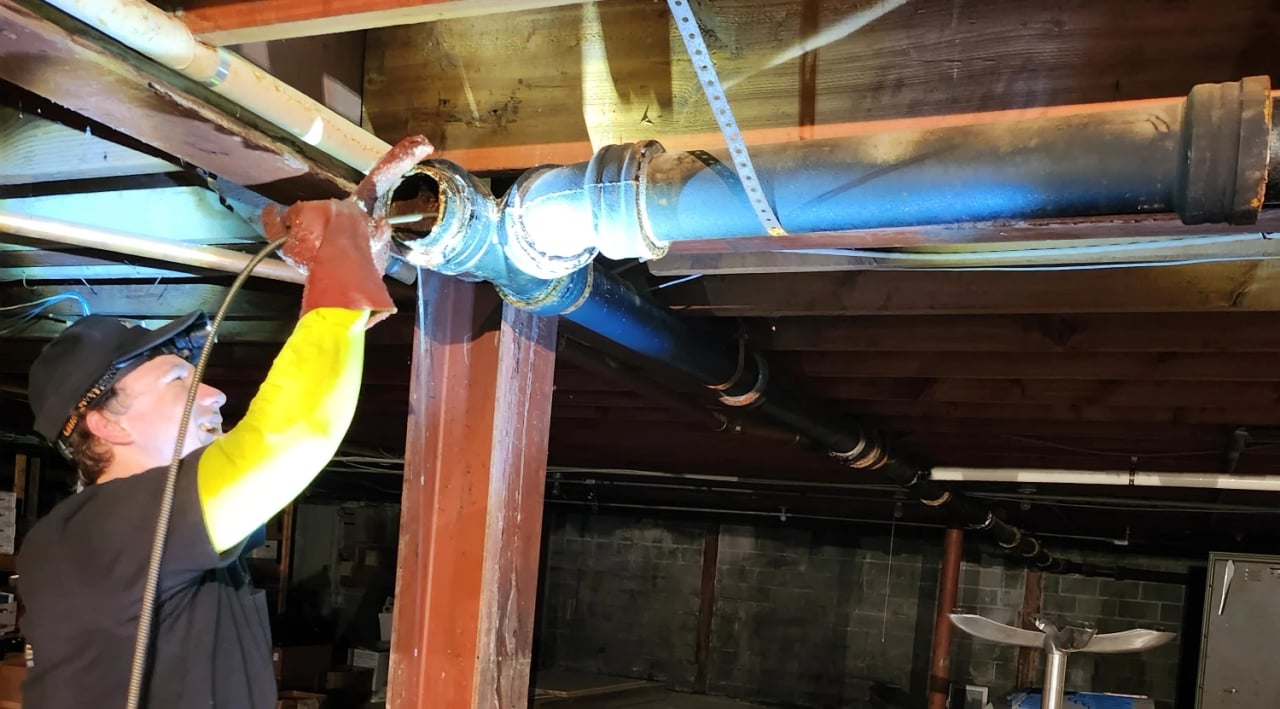
Winter in Scranton and Northeast Pennsylvania brings freezing temperatures, sudden thaws, and an increased risk of burst pipes and flooded basements. When temperatures drop, exposed plumbing in older homes, newer basements, and unheated crawlspaces can freeze, potentially leading to expensive water damage.
A burst water pipe or a backed-up main sewer lateral can quickly send water or wastewater into your home. Fortunately, a few preventative measures can help protect your plumbing system and reduce the risk of costly repairs.
Why Do Pipes Freeze in Winter?
When temperatures fall below freezing, water inside exposed pipes can turn to ice. As the ice forms, pressure can build inside the pipe, potentially causing it to crack or burst. Pipes in unheated basements, crawlspaces, garages, and exterior walls are particularly vulnerable.
Even newer homes can experience frozen pipes when plumbing is poorly insulated or exposed to cold drafts. Winter freeze-and-thaw cycles can also place additional stress on plumbing and drainage systems.
3 Ways to Protect Your Pipes from Freezing
1. Insulate Exposed Pipes
One of the simplest ways to help prevent frozen pipes is to insulate plumbing in cold areas of your home. Foam pipe insulation helps reduce heat loss and provides an additional layer of protection around exposed water lines.
Pay particular attention to pipes in unheated basements, crawlspaces, garages, and areas near exterior walls. Sealing gaps around foundation openings can also help keep freezing air away from your plumbing.
2. Install Pipe Heating Cables
For pipes exposed to especially cold conditions, thermostatically controlled electric heating cables can provide supplemental heat to help prevent freezing. These cables wrap around vulnerable pipes and plug into an electrical outlet.
Choose heating cables specifically designed for your pipe material and follow the manufacturer's installation instructions. Improper installation can create a fire or electrical hazard, so professional installation may be appropriate in some situations.
3. Have Your Main Sewer Lateral Inspected
Frozen water pipes aren't the only winter plumbing concern. Blockages, tree root intrusion, damaged pipes, and accumulated debris can restrict wastewater flow and contribute to sewer backups.
A professional sewer line inspection can help identify existing problems before they become emergencies. If your home has experienced recurring backups or slow drains, addressing the underlying issue before winter can help reduce the risk of wastewater entering your basement.
What to Do If Your Pipes Freeze
If you suspect a pipe has frozen, take action before the situation worsens.
- Shut off the water if a pipe has burst. If you discover leaking or significant water damage, turn off your home's main water supply if it is safe to do so.
- Keep faucets open when safely thawing a frozen line. Opening the affected faucet can help relieve pressure as ice melts.
- Avoid open flames. Never use a blowtorch or other open-flame device to thaw pipes. If you cannot safely access or thaw the pipe, contact a qualified plumber.
- Watch for signs of a sewer backup. If wastewater begins backing up into basement drains or plumbing fixtures, stop using affected fixtures and contact a sewer professional.
If a pipe has already burst or sewage is entering your home, prompt professional assistance can help limit additional damage.
Don't Overlook Your Sewer Line
While frozen water supply pipes can cause significant damage, sewer line problems can also lead to costly winter emergencies. A blocked or damaged main sewer lateral may prevent wastewater from leaving your property, resulting in backups through basement floor drains, toilets, or other plumbing fixtures.
Primo Sewer Cleaning provides sewer and drain cleaning services to help homeowners address blockages and drainage problems. Professional inspection and cleaning can help identify and resolve certain issues before they lead to more serious disruptions.
Learn more about our sewer and drain cleaning services. i Homeowners throughout Scranton and Northeast Pennsylvania can reduce their risk of winter plumbing emergencies by insulating exposed pipes, installing appropriate pipe heating cables, and addressing sewer line problems before temperatures drop.
Preventative maintenance is often far less disruptive than dealing with a burst pipe, flooded basement, or sewer backup in the middle of winter.
If you're experiencing recurring drain clogs, slow drainage, or sewer line problems, contact Primo Sewer Cleaning to discuss your options and help prepare your plumbing system for the colder months.